Courses / Manual rifle / Lesson 5
When you may use it
Private defence, necessity and the law. Lesson 5 of 8 · about 7 minutes to watch.
Watch
Step through the slides. The trainer's words are under each one.
When you may use it
Manual rifle, lesson 5 of 8: private defence, necessity and the law
The unit standard asks every delegate to describe when a firearm may and may not be used. In this lesson Anel explains private defence and necessity in plain words, then walks Marike's group through real situations.
A hunting rifle is licensed for a purpose
- Section 15 or 16 licences are for hunting and sport shooting
- The unit standard still asks you to know private defence and necessity
- Using a firearm against a person is judged on all the facts
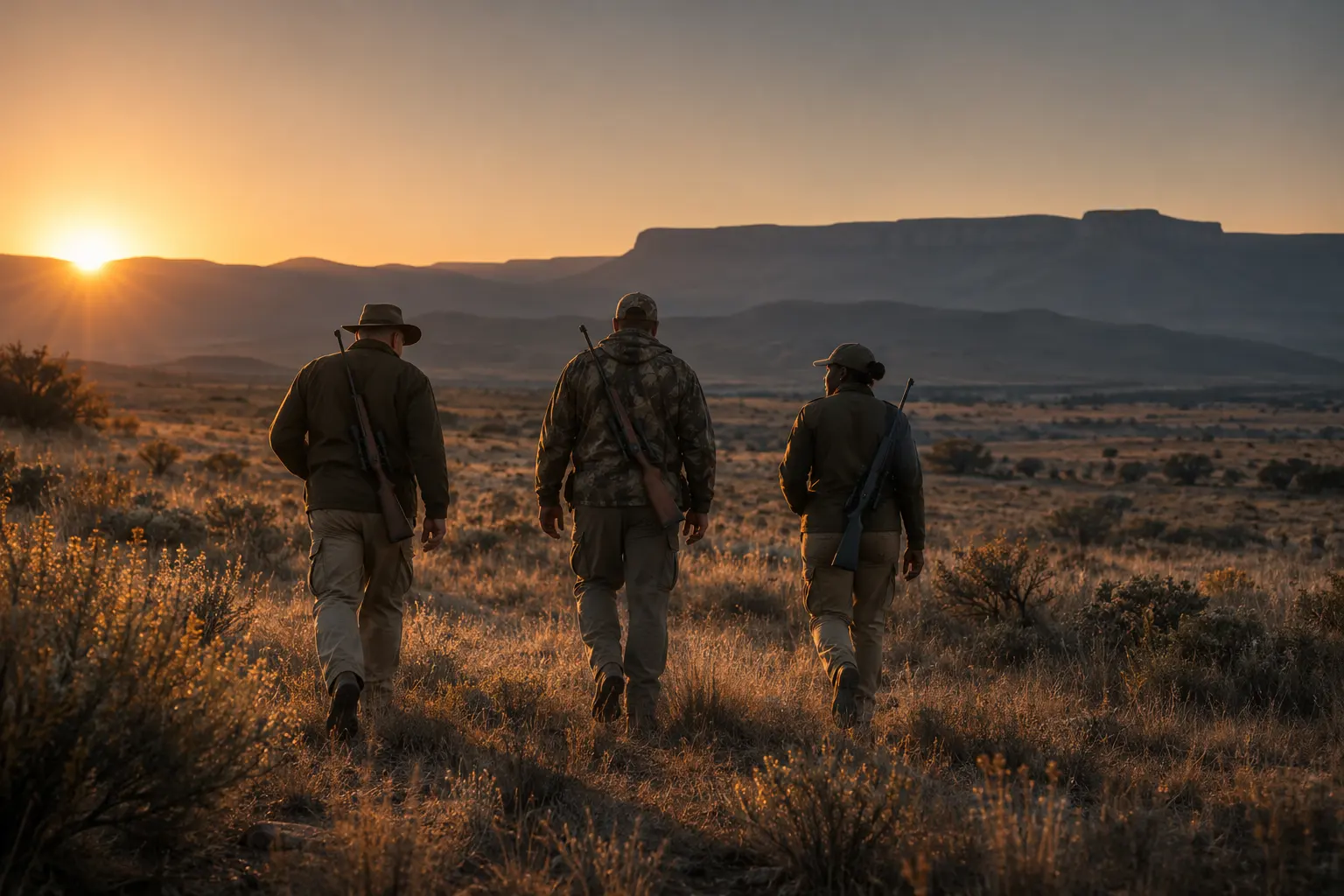
Marike's rifle is licensed under section 15 for occasional hunting. It is not a self-defence licence. Even so, the unit standard asks every delegate to describe the common law on private defence and necessity, and the situations in which a firearm may and may not be used. That is because anyone holding a firearm may one day face a situation where the question matters. This lesson gives you the general principles. It is not legal advice, and a court decides every case on all its facts.
Private defence: the attack and the defence
| The attack must be… | The defence must be… |
|---|---|
| Unlawful | Directed at the attacker |
| Against a legally protected interest, such as life or bodily integrity | Necessary to stop the attack: no less harmful way was reasonably available |
| Already begun, or about to begin (imminent) | Reasonable in the circumstances, compared with the attack |
| Not already over | Done knowing that you are defending yourself or someone else |
Private defence, often called self-defence, has requirements for both the attack and the defence, as they are generally stated. The attack must be unlawful, against an interest the law protects, like life or bodily integrity, and it must have begun or be about to begin. An attack that is over cannot be defended against; that is revenge. The defence must be aimed at the attacker, necessary to stop the attack, and reasonable in the circumstances. A court looks at everything: the threat, the means available, whether escape was possible, and what you knew at the time.
Necessity is different
- A danger you did not cause unlawfully
- Avoiding it harms an innocent person or their property
- The harm you cause must not be out of proportion
- Again, a court weighs all the facts
Necessity is a different defence. In private defence you act against an attacker. In necessity you face a danger, and to avoid it you harm the interests of someone who did nothing wrong, often their property. The harm you cause must not be out of proportion to the harm you avoid. For example, breaking into a locked hut to escape a veld fire. Courts treat necessity carefully, and it rarely justifies harming a person.
May and may not
| Situation | Generally |
|---|---|
| Shooting a kudu on a hunt with the landowner's permission and the right permits | May: the purpose of the licence |
| An armed intruder attacking your family, with no safe way out | Private defence may apply; a court decides |
| Shooting at a thief running away with your generator | May not: the attack is over and life is not threatened |
| Firing a warning shot into the air at a party | May not: firing in public without good reason is an offence |
| Pointing an unloaded rifle at a trespasser to scare him | May not: pointing a firearm without good reason is an offence |
Here are some situations, and what generally applies. Hunting a kudu with the landowner's permission and the permits your province requires is what the licence is for. An armed intruder attacking your family with no safe way out may be private defence, but a court decides. Shooting at a thief running away with your generator is not: the attack is over and life is not threatened. A warning shot in the air at a celebration is an offence under section 120(7). And pointing a rifle at someone to scare them, even unloaded, is an offence under section 120(6), with a maximum of ten years.
Often the safest choice is to leave
- Lock yourself and your family in a safe room
- Call the police and your security company
- Possessions can be replaced; people cannot
Anel always ends this lesson the same way. The most reliable way to come through a dangerous situation is often not to use a firearm at all: get yourself and your family behind a locked door, call the police and your armed response, and let possessions go. Things can be replaced. People cannot. Marike thinks about the farmhouse and decides which room would be her family's safe room.
Hunting has its own rules too
- The landowner's permission
- The permits your province requires
- Positive identification before every shot
Hunting is lawful use, but it has its own rules on top of the Firearms Control Act. You need the landowner's permission, and the hunting permits and seasons that your province's nature conservation laws require. Ask your trainer or your hunting association about the rules where you hunt. And every shot needs positive identification of the animal, which lesson 6 covers.
Your turn
Before lesson 6
- Do the exercise: Which applies?
- Answer four quick questions on this lesson
- Think of one situation where leaving is the safest choice
Before you move on, do the exercise, Which applies?, and answer the four questions on screen. Then, in your own time: think of one situation where leaving is the safest choice. Next lesson: the fundamentals of shooting accurately and safely.
Do: Which applies?
For each situation, which defence may apply? A court always decides on all the facts.
Check
Four quick questions. The reason shows as soon as you answer.
Apply
Where this shows up in your own life.
Think of one situation at home where leaving would be the safest choice
Ridgeview Firearms Academy and its people are fictional. This is study material written from the Firearms Control Act and the SAQA unit standards. It isn't an accredited course or legal advice; your accredited training provider runs the official tests.