Courses / Manual rifle / Lesson 4
Carry, transport and store
What the law and good sense require. Lesson 4 of 8 · about 7 minutes to watch.
Watch
Step through the slides. The trainer's words are under each one.
Carry, transport and store
Manual rifle, lesson 4 of 8: what the law and good sense require
Marike's rifle spends far more time in the safe and in her bakkie than in her hands. The unit standard says controlling it includes safe storage. In this lesson you learn how to carry, transport and store a rifle within the law.
In public, the rifle is covered and under your control
- In a holder designed for carrying it: a rifle bag or case
- Completely covered
- Under your effective control at all times
Section 84 of the Act says a rifle carried in a public place must be in a holder designed, made or adapted for carrying it, such as a rifle bag or hard case. It must be completely covered, and you must be able to control it effectively. Open carry in a public place is not allowed. When Marike drives into town to the gunsmith, her rifle travels in a lockable case, unloaded.
Moving a rifle by vehicle
- 1UnloadChamber and magazine empty, checked
- 2Case itIn a bag or case, covered
- 3Keep controlNever unattended unless locked in a fixed lock-away safe
- 4Ammunition separateUnder your control too
Firearms must be transported in the prescribed manner, says section 83. In practice: unload and check it, put it in its bag or case, and keep it under your control. Never leave a rifle unattended in a vehicle unless it is locked in a lock-away safe bolted to the vehicle's body, which regulation 86(12) describes: steel at least 2 mm thick, enclosing the whole firearm, with its own lock. Marike's bakkie has one under the back seat.
At home, it goes in the safe
- 1Not on you?Not under your direct physical control
- 2Into the safeSABS 953-1 safe or 953-2 strongroom
- 3UnloadedRifles under section 15 or 16 are stored unloaded
- 4With the ammunitionLocked away too; only you can open it
Whenever the rifle is not on you or under your direct personal and physical control, it and its ammunition must be locked in a safe or strongroom that meets SABS 953-1 or 953-2. That is regulation 86(1). Regulation 86(11) adds that firearms other than a section 13 self-defence firearm, so Marike's hunting rifle, must be stored unloaded, and that the licence holder must have exclusive access, or the safe must not open without them there. Failing to lock it away is an offence under section 120(8).
Bolt the safe down and guard the keys
- Bolt it to a wall or floor as the standard requires
- Keep the keys or the code to yourself
- Moving house? Tell your DFO, who checks the new safe
A safe that can be carried away is not protecting anything, so bolt it down as the standard requires. Keep the keys or code to yourself: losing a firearm because you did not keep the keys safe is also an offence under section 120(8)(b). And if you move house, tell your Designated Firearms Officer; under regulation 100 they check that the safe at your new address complies.
Carrying in the veld
| Carry | Muzzle points | Use it when |
|---|---|---|
| Sling over the shoulder | Up | Walking long distances, unloaded |
| Two hands, muzzle forward | Ahead and down | Stalking with nobody in front |
| Cradled across the body | To the side, away from others | Walking with nobody on that side |
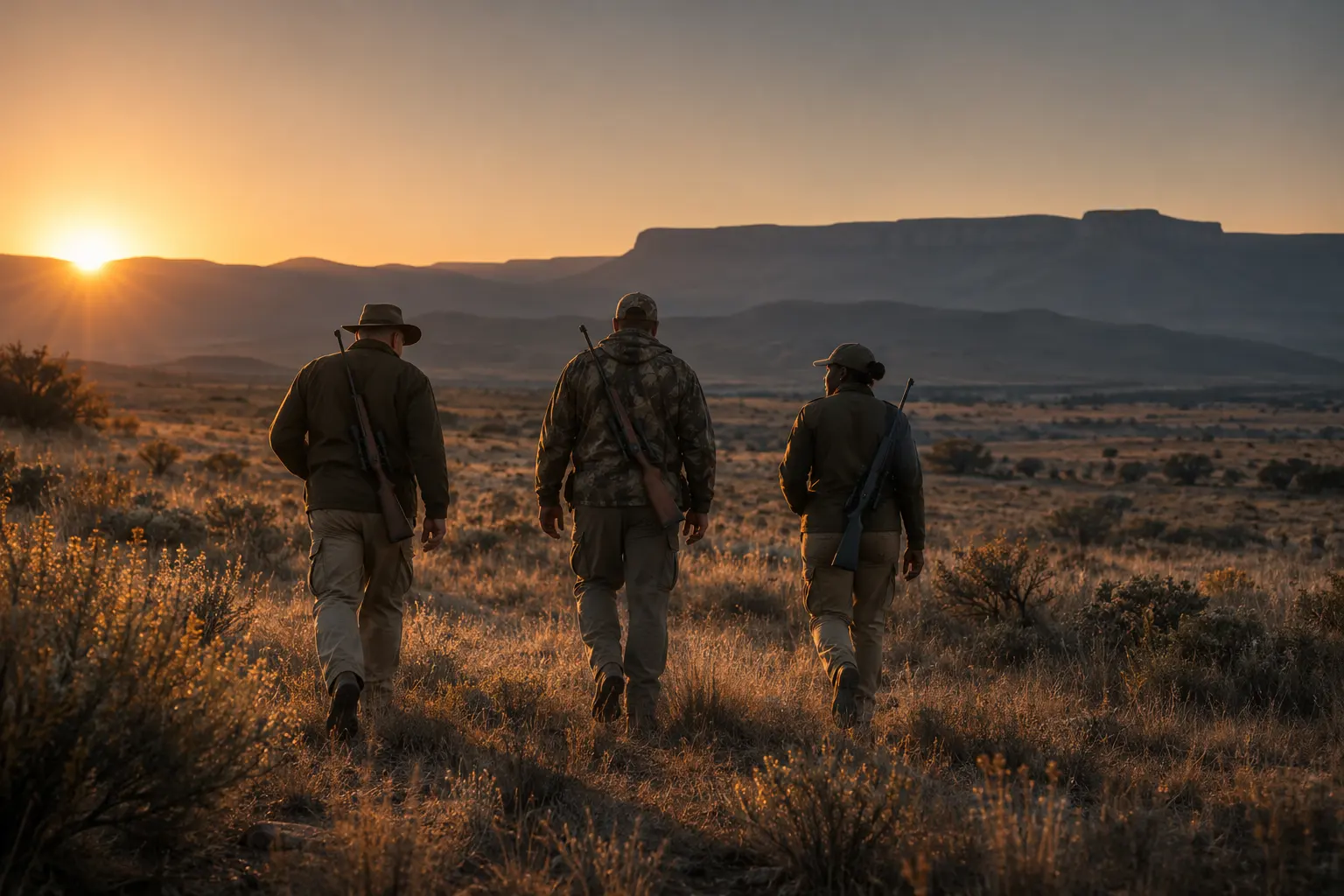
On a farm or a hunting property you carry the rifle openly, so the rule is about muzzle control. On a sling over the shoulder, the muzzle points up. Stalking, with two hands and the muzzle forward and down, nobody walks in front of you. Cradled across your body, the muzzle points to the side, so nobody walks on that side. Whatever the carry, swap it when the people around you move. Ask your trainer which carries they teach; these are the common ones.
Getting it wrong is an offence
| What went wrong | Section | Maximum prison |
|---|---|---|
| Not storing or transporting as prescribed | 83 | 15 years |
| Not locking it away, or losing it through carelessness | 120(8) | 5 years |
| Carrying in public uncovered or without a proper holder | 84 | 2 years |
| Not reporting a loss or theft within 24 hours | 120(11) | 10 years |
These are the maximum prison terms in Schedule 4 of the Act for getting carrying, storage or loss wrong. A court decides the actual sentence and can impose a fine instead. A conviction for not storing a firearm properly, or for losing one through negligence, can also lead to being declared unfit to possess a firearm under section 103.
Your turn
Before lesson 5
- Do the exercise: Lawful or not?
- Answer four quick questions on this lesson
- Check where your safe will go and how it will be bolted down
Before you move on, do the exercise, Lawful or not?, and answer the four questions on screen. Then, in your own time: check where your safe will go and how it will be bolted down. Next lesson: when the law allows you to use a rifle.
Do: Lawful or not?
Is each of these lawful, or not?
Check
Four quick questions. The reason shows as soon as you answer.
Apply
Where this shows up in your own life.
Check where your safe will go and how it will be bolted down
Ridgeview Firearms Academy and its people are fictional. This is study material written from the Firearms Control Act and the SAQA unit standards. It isn't an accredited course or legal advice; your accredited training provider runs the official tests.