Courses / Manual rifle / Lesson 1
Safety first
The rules that prevent accidents. Lesson 1 of 8 · about 8 minutes to watch.
Watch
Step through the slides. The trainer's words are under each one.
Safety first
Manual rifle, lesson 1 of 8: the rules that prevent accidents
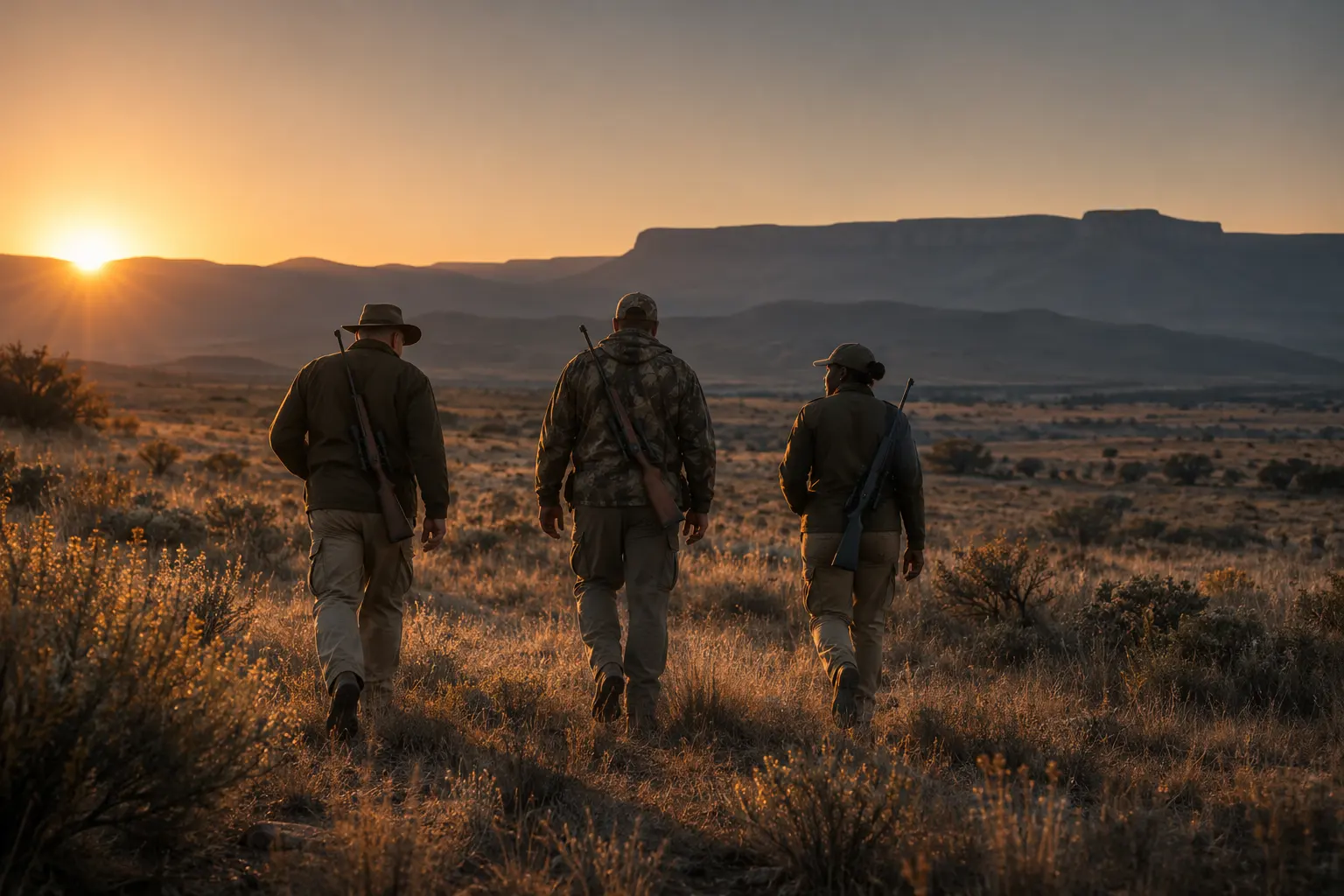
Welcome to the manual rifle course. You will follow Marike Joubert, who farms near Oudtshoorn and hunts plains game, as she does her competency training at Ridgeview Firearms Academy with instructor Anel Botha. We start where every competency course starts: the rules that keep everyone alive.
Safety comes before every shot
- Most accidents happen with a rifle someone thought was unloaded
- Four rules prevent almost all of them
- They apply at home, at the range and in the veld
Marike Joubert has hunted with her father's rifle since she was a teenager. On her first morning at Ridgeview, Anel Botha, the instructor, tells her what she tells everyone: experience does not replace the rules. Most accidents happen with a rifle someone believed was unloaded. Four rules prevent almost all of them, and the assessor watches them from the moment you touch the rifle, not only when you shoot.
The four rules
Here are the four rules. One: treat every rifle as loaded until you have checked it yourself. Two: keep the muzzle pointed in a safe direction, always, loaded or not. Three: keep your finger off the trigger, straight along the side of the stock, until your sights are on the target and you have decided to shoot. Four: know your target and what is beyond it, because a rifle bullet that misses or passes through keeps going. The unit standard lists each of these as something you must show.
A safe direction depends on where you are
| Where you are | A safe direction is usually… | Never |
|---|---|---|
| On the range | Downrange, towards the backstop | Behind the firing line or at people |
| At home, checking the rifle | A solid wall with nobody behind it, or the floor of a ground-floor room | Towards a window, a door or another room |
| In the veld | The ground a few metres ahead, or the sky away from people | Along the line of other hunters |
| In or near a vehicle | Away from the vehicle and everyone in it | Across the cab or the back of a bakkie |
A safe direction is one where an accidental shot would hurt nobody and damage nothing important. It changes with where you are. On the range it is downrange, towards the backstop. At home it is a solid wall with nobody on the other side, or the floor of a ground-floor room. In the veld it is the ground just ahead of you, or up, away from people. Anel asks Marike to choose a safe direction before she even unzips her rifle bag.
Keep your finger straight until you decide to shoot
- Finger along the side of the stock, outside the trigger guard
- Onto the trigger only when the sights are on the target
- Off again the moment you stop aiming
Rule three is the one people break without noticing. Your trigger finger rests straight along the side of the stock, outside the trigger guard. It goes onto the trigger only when your sights are on the target and you have decided to fire, and comes off as soon as you stop aiming. Many rifles have a safety catch, but it is a mechanical part and can wear or fail. It is a back-up to the rules, never a replacement.
Someone hands you a rifle: check it yourself
- 1Muzzle safePoint it in a safe direction as you take it
- 2Open the boltDraw it fully back
- 3Look and feelChamber and magazine both empty
- 4Keep it openUntil you are ready to use it
When someone hands you a rifle, even someone you trust, check it yourself. Take it with the muzzle in a safe direction, open the bolt fully, then look into the chamber and the magazine and feel with your little finger that both are empty. Leave the bolt open. On Marike's first morning a fellow delegate hands her a rifle and says it is empty. She opens it and checks anyway, and Anel nods. That is exactly what the assessor wants to see.
The veld has its own risks
| Situation | What you do |
|---|---|
| Crossing a fence | Unload, open the bolt, pass the rifle over or through first, then follow |
| Getting onto a vehicle | Unload completely before you climb on, muzzle away from everyone |
| Walking with others | Keep your muzzle out of everyone's line, especially when you turn |
| A slip or fall | Unload and check the barrel is clear before you fire again |
| Resting | Unloaded, bolt open, laid down where nobody will step over it |
Most hunting accidents are not about shooting at all. They happen crossing fences, climbing onto vehicles, and slipping. Before you cross a fence, unload, open the bolt, and pass the rifle over or through before you climb. Unload before you get onto a vehicle. When you walk with others, keep your muzzle out of everyone's line, especially when you turn. If you slip and the muzzle goes into soil, unload and check the barrel is clear before you fire, because a blocked barrel can burst.
Only sober, fit hands handle a rifle
- Never handle a firearm under the influence
- Never hand it to someone drunk, drugged or unwell
- Wear hearing and eye protection when you shoot
Handling a firearm under the influence of alcohol or drugs is an offence under section 120(4) of the Firearms Control Act, and so is handing it to someone you know or should know is under the influence (section 120(5)). After a long hunting day it is tempting to have a drink before the rifles are put away. Put them away first. And wear hearing and eye protection whenever you shoot: hearing damage from gunfire is permanent.
Your turn
Before lesson 2
- Do the exercise: Safe or unsafe?
- Answer four quick questions on this lesson
- Name the safest direction to point a rifle at home
Before you move on, do the exercise, Safe or unsafe?, and answer the four questions on screen. Then, in your own time: name the safest direction to point a rifle at home. Next lesson: the parts of your rifle and how a bolt action works.
Do: Safe or unsafe?
Marike's first day at Ridgeview. Is each action safe or unsafe?
Check
Four quick questions. The reason shows as soon as you answer.
Apply
Where this shows up in your own life.
Name the safest direction to point a rifle in your home and on your farm or range
Ridgeview Firearms Academy and its people are fictional. This is study material written from the Firearms Control Act and the SAQA unit standards. It isn't an accredited course or legal advice; your accredited training provider runs the official tests.