Courses / The Firearms Control Act / Lesson 1
The law and you
What the Act controls and who does what. Lesson 1 of 8 · about 8 minutes to watch.
Watch
Step through the slides. The trainer's words are under each one.
The law and you
Firearms Act, lesson 1 of 8: what the Act controls and who does what
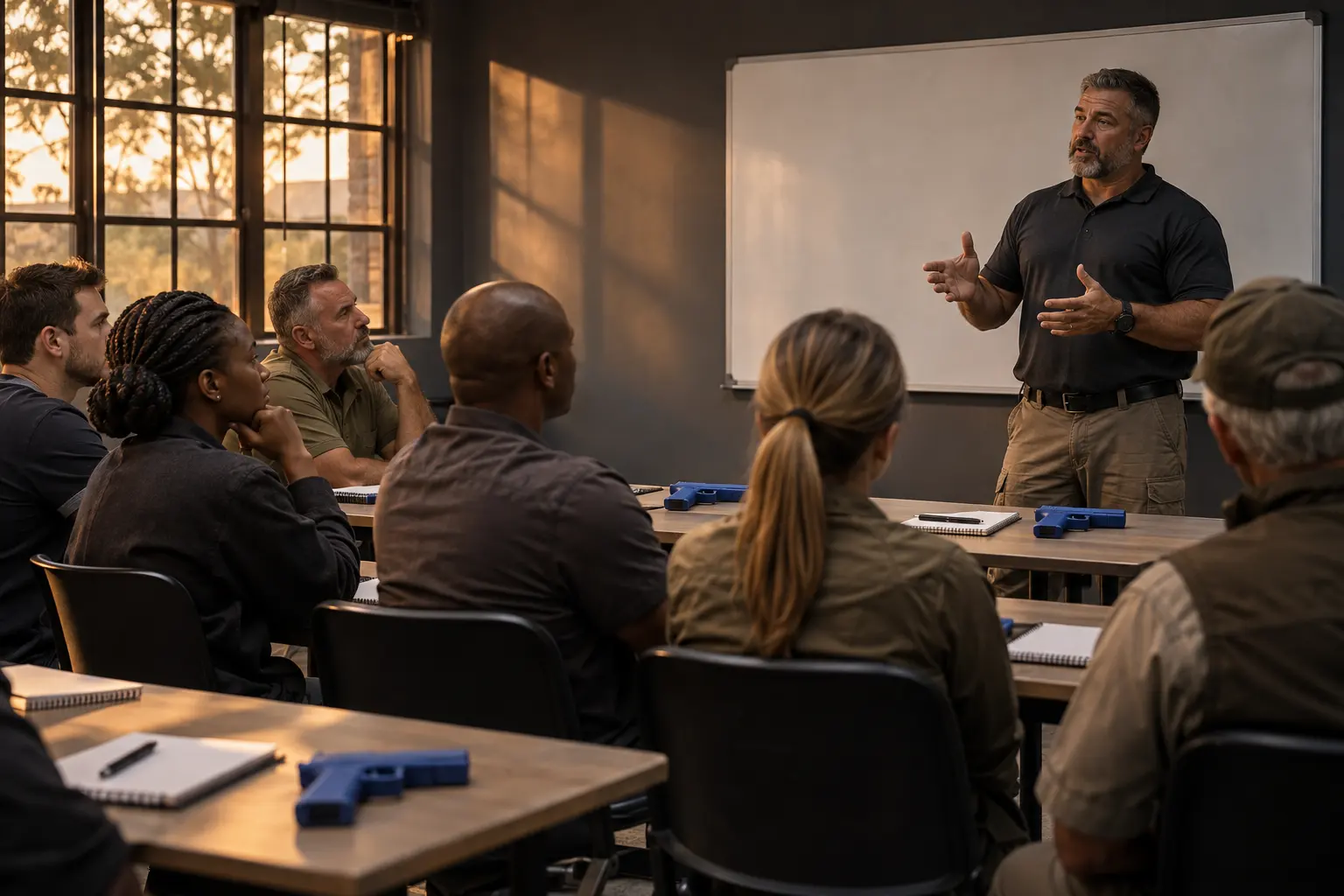
Welcome to the Firearms Act course. This is the one every applicant does, whatever firearm they want. You'll follow four people at Ridgeview Firearms Academy outside George as they learn the law with their instructor, Anel Botha.
Four delegates, one law
Meet the four delegates in Anel's classroom. Sipho wants a pistol to protect his family. Thandi shoots competitively at her club. Marike farms near Oudtshoorn and hunts. Johan has shot clays for years and is finally doing it properly. Four reasons, four firearms, one law. Every one of them has to pass this knowledge test before they can get a competency certificate.
The Act controls who may possess firearms, and how
- Firearms Control Act 60 of 2000, as amended
- Plus the Firearms Control Regulations, 2004
- Covers licences, competency, carrying, storage and ammunition
- Breaking it is a criminal offence
The Act's purpose is to keep firearms out of the wrong hands and make sure people who have them are competent and responsible. The detail sits in the Regulations. Everything in this course comes from those two documents. Laws change, so always check the current version.
Who does what
| Who | What they do |
|---|---|
| The Registrar (SAPS) | Decides on licences, permits and unfitness; keeps the Central Firearms Register |
| Your DFO | The Designated Firearms Officer at your police station; receives applications |
| An accredited trainer | Trains you and runs the knowledge and practical tests |
| A licensed dealer | Sells firearms and handles transfers and disposals |
| You | Store, carry and use your firearm lawfully, and report losses |
Five players matter. The Registrar is the head of the Central Firearms Register at SAPS and makes the decisions. Your DFO, the Designated Firearms Officer, is who you actually see at the police station. Your accredited trainer, like Anel, trains and tests you. A dealer sells and transfers firearms. And you carry the day-to-day duties. No private company, app or association can issue a licence.
From training to licence
- 1TrainKnowledge and practical tests
- 2CompetencySAPS 517 at your station
- 3SafeSABS 953, bolted down
- 4ApplySAPS 271 with motivation
- 5LicenceCollect from the dealer
Here's the path Sipho will take. First this course and his handgun course. Then he applies for his competency certificate on SAPS 517. Then a safe, then the licence application on SAPS 271 with a motivation. When it's approved, he collects his pistol from the dealer. You can't skip a step: no licence without competency, under section 6.
What you'll learn
The unit standard, number 117705, has three outcomes, and this course follows them. Your duties and obligations. The rules for firearms themselves. And ammunition. Eight short lessons, then a ten-question final quiz.
Study material, not legal advice
- Written from the Act and the Regulations
- Your accredited trainer runs the official tests
- When in doubt, ask your DFO or an attorney
A quick word on what this is. It's study material that explains the law in plain words. It's not the official manual and it's not legal advice. Your accredited trainer runs the real tests.
Your turn
Before lesson 2
- Do the exercise: Who does it?
- Answer four quick questions on this lesson
- Find your local police station's DFO hours
Before the next lesson, sort ten jobs into who does them, answer four quick questions, and look up when your local DFO is open. Next time: getting a licence.
Do: Who does it?
Each of these jobs belongs to someone. Say who does it.
Check
Four quick questions. The reason shows as soon as you answer.
Apply
Where this shows up in your own life.
Look up when the DFO at your local police station is open, and write it down.
Ridgeview Firearms Academy and its people are fictional. This is study material written from the Firearms Control Act and the SAQA unit standards. It isn't an accredited course or legal advice; your accredited training provider runs the official tests.